Does Your Medicine Really Expire? The Science Behind Shelf Life Dates and What They Mean for Your Health
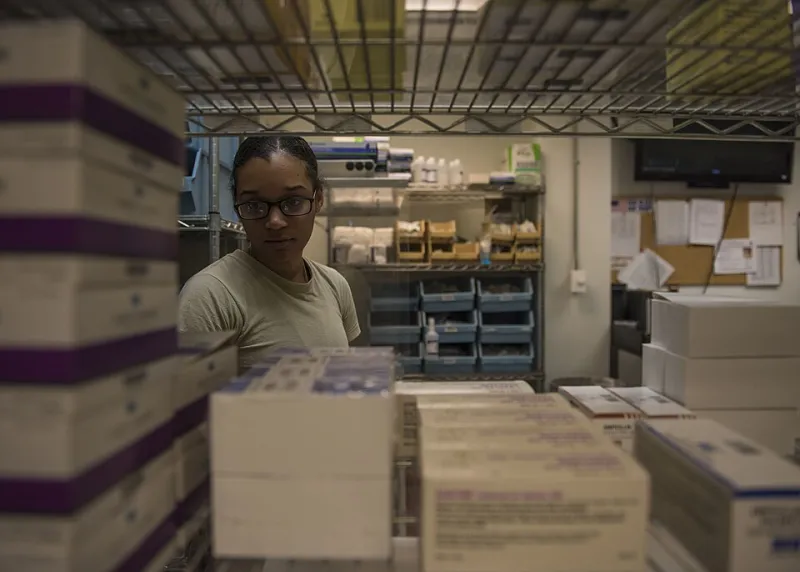
Photo: Senior Airman Justyn Freeman, Public domain, via Wikimedia Commons
Open almost any medicine cabinet in America and you will likely find at least one bottle of something past its printed expiration date. Maybe it is an old antibiotic from a respiratory infection two winters ago, or a prescription painkiller left over from a dental procedure. The instinct most people follow is simple: when in doubt, throw it out. But the reality of pharmaceutical shelf life is considerably more nuanced than a stamped date on a label suggests—and understanding that nuance could make a meaningful difference in how you manage your household's health supplies.
At MedShop 24x7, we believe that informed patients make better decisions. Whether you are stocking a home health kit or deciding whether to refill a prescription at 11 PM on a Tuesday, having accurate information about medication stability is part of responsible health management.
How Expiration Dates Are Actually Determined
The expiration date printed on a medication is not a precise biological countdown to the moment a drug becomes dangerous. It is, more accurately, the last date through which the manufacturer can guarantee full potency and stability under the storage conditions specified on the label—typically room temperature, away from direct light and moisture.
The U.S. Food and Drug Administration requires pharmaceutical manufacturers to conduct stability testing before bringing a product to market. These tests involve storing the drug under controlled conditions and measuring its chemical composition at regular intervals. When potency falls below 90 percent of the labeled dose, the product is considered expired. Manufacturers set the expiration date at the point where they have data confirming stability—not necessarily the point where the drug actually begins to degrade.
There is a critical distinction here: the expiration date reflects the boundary of tested, guaranteed stability. It does not automatically signal that the drug becomes ineffective or harmful the following day.
The SLEP Study: What the Military Discovered About Long-Term Potency
Perhaps the most compelling body of evidence on this subject comes from an unlikely source: the U.S. military. Beginning in the 1980s, the Department of Defense partnered with the FDA on the Shelf Life Extension Program (SLEP), a large-scale initiative designed to evaluate whether stockpiled medications could remain viable beyond their labeled expiration dates.
The results were striking. Of the hundreds of drug products tested, the vast majority retained acceptable potency well beyond their expiration dates—in some cases by years or even decades. Certain medications showed little to no degradation even fifteen years after their stamped expiry. The program saved the federal government hundreds of millions of dollars by extending the usable life of stockpiled pharmaceuticals.
These findings do not mean that expiration dates are meaningless. They do, however, suggest that the relationship between a date on a label and actual drug efficacy is more complex than most consumers are led to believe.
Medications That Degrade More Rapidly
Not all drugs are created equal when it comes to shelf life. Several categories are known to degrade meaningfully after expiration, and for these, the printed date carries genuine clinical weight.
Liquid formulations, including oral suspensions and eye drops, tend to be less stable than solid dosage forms. The presence of water accelerates chemical breakdown and creates conditions hospitable to microbial growth.
Nitroglycerin is among the most time-sensitive medications on the market. Used to treat acute angina, it can lose potency rapidly, particularly when exposed to light, heat, or air. For patients who depend on nitroglycerin for emergency cardiac events, using an expired supply is a genuine safety risk.
Insulin and other biologics follow strict expiration guidelines for good reason. These protein-based therapies are sensitive to temperature fluctuations and chemical degradation in ways that can affect both efficacy and safety. Diabetic patients should never use expired insulin without consulting a healthcare provider.
Tetracycline antibiotics have historically been associated with a degradation product that can cause kidney damage, though modern formulations are generally considered safer than older versions. Regardless, expired antibiotics of any class raise a different concern: reduced potency may result in inadequate treatment of a bacterial infection, potentially contributing to antibiotic resistance.
Epinephrine auto-injectors used to treat severe allergic reactions lose potency over time and should be replaced promptly upon expiration. In an anaphylactic emergency, a degraded dose could prove life-threatening.
Medications with Relatively Robust Stability
On the other end of the spectrum, certain drug classes tend to maintain their chemical integrity well past the labeled expiration date when stored properly.
Solid oral medications—tablets and capsules—in their original, sealed packaging generally fare better than liquids or opened containers. Studies have found that common drugs such as antihistamines, certain pain relievers, and some cardiovascular medications retained potency years beyond their expiration dates.
Over-the-counter staples like ibuprofen and acetaminophen in tablet form have demonstrated reasonable stability under proper storage conditions. This does not constitute a blanket endorsement for using expired medications, but it does put the risk in perspective for otherwise healthy adults managing minor ailments.
The Storage Variable Nobody Talks About Enough
One of the most underappreciated factors in medication stability is storage environment. The bathroom medicine cabinet—where most Americans keep their prescriptions—is one of the worst possible locations for drug storage. Heat and humidity from showers and baths accelerate chemical degradation far more aggressively than time alone.
A medication stored in a cool, dry, dark location in its original sealed container may remain stable well beyond its expiration date. That same medication stored in a steamy bathroom or a hot car will likely degrade much faster than the label assumes. The expiration date is calibrated for ideal conditions; real-world storage often falls short.
If you want your medications to last as long as possible, consider storing them in a bedroom drawer, a hall closet, or a dedicated health supply area away from heat sources and moisture. MedShop 24x7 carries a range of medication storage solutions designed specifically for home health organization.
When to Refill and When to Reassess
For most chronic condition medications—blood pressure drugs, cholesterol medications, thyroid hormones, antidepressants—the practical guidance is straightforward: do not rely on expired supplies for ongoing treatment. The risk is not necessarily that the medication will cause harm, but that reduced potency could mean your condition is not being managed as effectively as it should be. For conditions that require consistent therapeutic levels, that gap matters.
For occasional-use medications—a mild antihistamine for seasonal allergies, a pain reliever for a headache—the calculus is somewhat different. An expired tablet that is a few months past its date and has been stored properly is unlikely to pose a significant risk for a healthy adult. However, this is a general observation, not medical advice, and individual health circumstances vary widely.
The most responsible approach is to maintain a current, well-organized medicine cabinet with medications that are within their expiration window, and to use a reliable pharmacy you can access at any hour when a refill becomes necessary. Waiting until a medication runs out—or relying on an expired stockpile during a late-night health episode—is a situation that careful planning can prevent.
Making Informed Decisions at Any Hour
Expiration dates are a tool, not a verdict. They represent the outer boundary of a manufacturer's tested guarantee, not a precise biological deadline. Some drugs degrade meaningfully before that date; others remain stable well beyond it. The drug class, the formulation, the storage conditions, and the clinical stakes all factor into how seriously any given expiration date should be weighed.
What they should never be is a substitute for timely, appropriate medical care and access to fresh, properly stored medications. If you find yourself uncertain about an expired medication in your cabinet—particularly for a serious or chronic condition—the safest course is always to consult a pharmacist or physician and, when needed, to refill your prescription promptly.
At MedShop 24x7, we are available around the clock precisely because health questions and refill needs do not confine themselves to business hours. A well-stocked, up-to-date medicine cabinet is one of the most effective forms of home health preparedness—and keeping it current has never been more convenient.