Everything Else Went 24/7. Why Didn't Your Pharmacy?
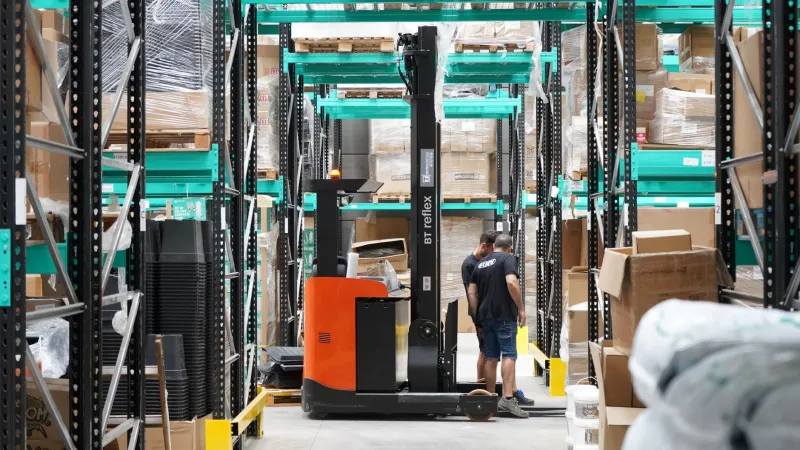
Consider how much of American life has quietly gone round-the-clock. You can deposit a check from your phone at midnight. You can order a sweater at 3 AM and watch it move through a warehouse before sunrise. You can fill an entire evening with streaming entertainment chosen from a catalog that never closes. Banking, retail, logistics, and media all dismantled the 9-to-5 model — and consumers never looked back.
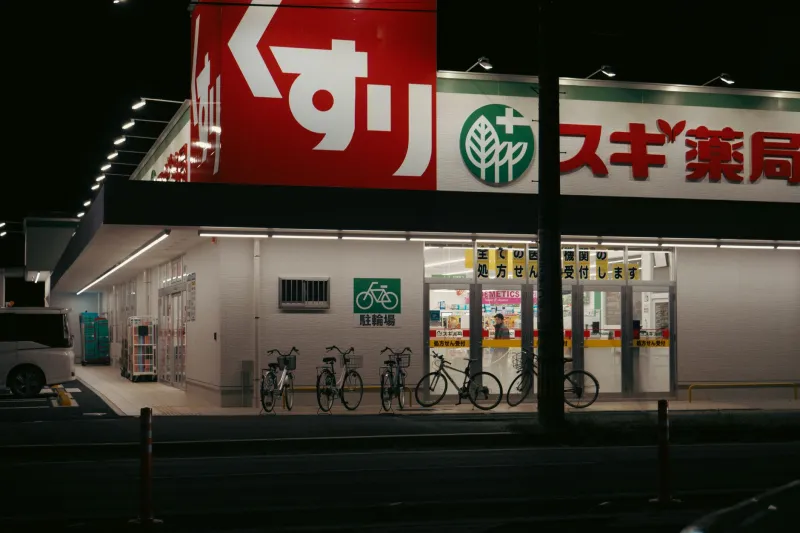
Yet one essential service remains stubbornly tethered to daylight hours: the pharmacy. For millions of Americans who work evenings, juggle caregiving, or simply fall ill outside the window of nine to five, getting a prescription filled or a health question answered still requires rearranging life around someone else's schedule. That mismatch is not a technological limitation. It is a choice — and an increasingly indefensible one.
The System Was Built for a Workforce That No Longer Exists
Traditional pharmacy hours reflect an era when the standard workday was universal, stores closed on Sundays, and the family member responsible for errands was typically home by mid-afternoon. None of those conditions describe the modern United States. Roughly one in five American workers holds a job requiring evening, overnight, or rotating shifts. Add in the gig economy, multiple jobs, and caregiving responsibilities, and the population for whom a 9-to-5 pickup window is genuinely convenient shrinks considerably.
The result is a quiet form of rationing. People delay refills until they can carve out a lunch break. Parents skip doses because the pharmacy closed before the end of their commute. Rural residents — where pharmacy deserts have spread rapidly — may drive an hour each way, only to arrive after closing. These are not edge cases; they are the predictable output of a system designed for a workforce that mostly disappeared half a century ago.
Convenience Elsewhere, Compromise in Healthcare
What makes the gap so glaring is how completely other industries have adapted. Banks that once closed at 3 PM now operate entirely through apps. Grocery chains run 24-hour locations and curbside pickup. Airlines, hotels, and insurers staff call centers around the clock because they understand that needs do not schedule themselves.
Healthcare is the exception where the stakes are highest and the accommodation lowest. A person experiencing a sudden asthma flare, a lost medication bottle before a flight, or a child's fever at 10 PM cannot simply wait until morning in every case — and yet the default infrastructure assumes they can. When access to essential medication depends on whether you happen to work a day shift, that is not a scheduling inconvenience. It is an equity problem.
The Objections, Examined
Defenders of traditional hours raise fair concerns. Safety is the first: medication dispensing involves verification, counseling, and error checking that some argue require full staffing. But this conflates hours with headcount. A well-designed system — combining licensed pharmacists, automated verification, telepharmacy consultations, and delivery logistics — can maintain rigorous safety standards at any hour. Errors stem from poor process, not from the time on the clock.
The second objection is economics: overnight demand is low, so overnight operation is unprofitable. But this argument collapses when applied consistently. We do not accept it for emergency rooms, utility companies, or payment networks. Certain services are foundational enough that availability is part of the product itself. Medication access belongs in that category, and online pharmacy models demonstrate that the economics can work when fulfillment is centralized rather than dependent on staffing a storefront in every neighborhood at every hour.
The third objection is regulatory inertia — prescribing rules, insurance processing windows, and state-by-state requirements that complicate after-hours operations. This is the easiest objection to dismiss, because it describes a problem we are choosing to maintain. Regulations written for a bygone era can be updated. Insurance systems that reject claims at midnight but approve them at 8 AM are not protecting anyone; they are simply enforcing an arbitrary boundary.
What a Baseline Standard Would Look Like
If 24/7 medication access became the expectation rather than the exception, several things would follow. Prescriptions would be verifiable and fillable at any hour through a combination of licensed online pharmacies and extended-hour fulfillment centers. Pharmacist consultations would be available by phone or video whenever a patient has a question — because questions rarely arise between 9 and 5 either. Insurance prior-authorization systems would run continuously instead of stalling urgent needs overnight. Delivery networks would treat medications with the same urgency and tracking transparency that retailers already apply to a pair of shoes.
None of this requires inventing new technology. Every component already exists in other industries. What is missing is the will to treat medication access as infrastructure rather than as a retail convenience.
A Reasonable Expectation, Not a Radical Demand
The case for around-the-clock pharmacy access does not require enthusiasm for disruption — only consistency. We already accept that electricity, banking, transportation, and communication operate continuously because modern life depends on them. Modern health management does too. Chronic conditions do not pause overnight. Acute illnesses do not respect business hours. The people least well-served by the current system — shift workers, caregivers, rural residents, the chronically ill — are precisely the people the system exists to serve.
It is worth asking why Americans tolerated the gap for so long, and the answer is probably inertia: things were always this way, so they seemed like they had to be. But the last two decades proved otherwise, industry after industry. Medication access is not exempt from that logic. It is simply the last holdout — and the one with the most to lose from staying behind.
The clock does not stop when the pharmacy closes. Increasingly, neither should the pharmacy.