Why Your After-Hours Pharmacy Still Asks Before It Ships: The Safety Protocols Behind Every Late-Night Medication Order

It happens more often than most people realize. A headache that won't quit at midnight, a child's fever that climbs past 101°F at 1 AM, a chronic condition that ran out of refills over a long weekend. You open a browser, navigate to an online pharmacy, and begin placing your order—only to find yourself answering a series of questions before checkout is complete. Allergies. Current medications. Medical conditions. Dosage confirmation.
For many customers, these prompts feel like friction. In reality, they represent one of the most important layers of protection that modern 24/7 pharmacy operations provide. Understanding why these checks exist—and what they are actually screening for—can transform frustration into genuine appreciation for how much is happening behind the scenes every time you order after hours.
The Gap That After-Hours Ordering Creates
During standard daytime hours, most prescription and over-the-counter medication purchases occur within a broader ecosystem of oversight. A physician may have recently reviewed your chart. A pharmacist at a physical counter has the opportunity to observe you directly, ask follow-up questions, and consult your profile in real time. The transaction exists within a chain of professional interaction.
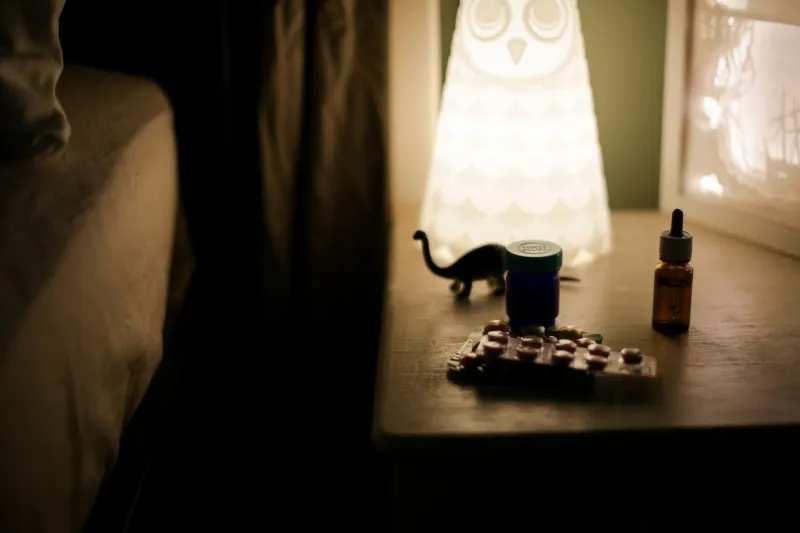
Late-night purchases, by contrast, often occur outside that chain. The physician's office is closed. Your primary care provider is unavailable. You are making a health decision based on your own assessment of your symptoms, and you are doing so without an immediate professional checkpoint. This is not inherently dangerous—millions of Americans manage their health responsibly outside of office hours every single day. But it does mean that the pharmacy itself must carry a greater share of the safety burden.
This is precisely why the questions you encounter at checkout are not optional or cosmetic. They are the digital equivalent of a pharmacist leaning across the counter and asking, "Have you taken anything else today?"
Drug Interaction Screening: The Most Critical Layer
Among the various checks that after-hours pharmacy systems perform, interaction screening is arguably the most consequential. Drug interactions occur when two or more substances—whether prescription medications, over-the-counter products, vitamins, or supplements—affect one another in ways that alter their safety or effectiveness.
Some interactions are merely inconvenient, reducing the efficacy of one medication. Others are medically serious. Combining certain antihistamines with sedatives, for example, can produce excessive central nervous system depression. Nonsteroidal anti-inflammatory drugs taken alongside blood thinners can significantly elevate bleeding risk. Even something as commonly purchased as a decongestant can create dangerous blood pressure elevations in patients taking specific antihypertensive medications.
When you provide your current medication list during an after-hours order, the pharmacy's screening system cross-references your intended purchase against that list. This is not bureaucratic box-checking. It is the same clinical reasoning a pharmacist would apply in person—translated into a system that operates at any hour, without fatigue, and with access to comprehensive drug interaction databases.
Allergy Verification: Why Repetition Serves a Purpose
If you have ever felt mildly annoyed at being asked about your allergies for what seems like the fifth time, you are not alone. It can feel redundant, particularly for returning customers whose profiles already contain that information.
The repetition, however, is intentional. Allergy verification at the point of purchase serves as a final-gate check against a specific category of error: the scenario in which a patient purchases a product containing an ingredient they are allergic to without realizing the connection. Many over-the-counter medications contain inactive ingredients—dyes, binders, coatings—that trigger allergic responses in sensitive individuals. Some combination products include active ingredients that share chemical structures with known allergens.
A customer purchasing a nighttime cold remedy, for instance, may not immediately recognize that it contains an ingredient related to a compound that caused a reaction in the past. The allergy check at checkout is the system's opportunity to flag that connection before the product is dispensed.
Dosage Verification and the Risk of Well-Intentioned Errors
Late-night health decisions are often made under conditions that compromise careful reasoning. Fatigue, pain, anxiety, and the urgency of caring for a sick family member all affect judgment. In these circumstances, dosage errors become more likely—not because customers are careless, but because they are human.
After-hours pharmacy systems are designed with this reality in mind. Dosage verification prompts confirm that the quantity being ordered is appropriate for the customer's weight, age, and stated medical purpose. For pediatric medications in particular, this step is critical. Dosing for children is not simply a scaled-down version of adult dosing; it is calculated based on specific weight ranges and age brackets, and errors in either direction carry real consequences.
When a system pauses to confirm that the children's pain reliever you are ordering is appropriate for a four-year-old weighing 38 pounds, it is not questioning your competence as a parent. It is performing the same calculation a pharmacist would perform before handing the bottle across the counter.
How 24/7 Systems Differ From Daytime Operations
The infrastructure supporting after-hours pharmacy operations is not simply a daytime system left running overnight. Reputable 24/7 pharmacies build specific protocols around the realities of off-peak ordering. These include escalation pathways for flagged orders—situations in which an automated system identifies a concern significant enough to require human pharmacist review before the order is processed, regardless of the hour.
This means that an order placed at 3 AM that triggers a serious interaction alert does not simply proceed. It enters a review queue staffed by licensed pharmacists who are working precisely because the pharmacy operates around the clock. The customer may receive a notification, a callback, or a request for clarification before the order ships.
This model reflects a core principle of responsible 24/7 pharmacy operation: accessibility and safety are not competing values. The goal is not simply to make medications available at any hour—it is to make them available safely, with the same standard of care that exists during business hours.
What Customers Can Do to Support the Process
The safety checks built into after-hours pharmacy systems function best when customers engage with them honestly and completely. Maintaining an accurate and up-to-date medication profile—including prescriptions, over-the-counter products, vitamins, and supplements—allows interaction screening to function as intended. Providing accurate allergy information, even for reactions that seemed minor, gives the system the data it needs to protect you.
If you are ever uncertain about a question during the ordering process, the appropriate response is to pause rather than guess. A 24/7 pharmacy with licensed pharmacists available at all hours can answer questions in real time, ensuring that your order is placed correctly rather than quickly.
The questions your after-hours pharmacy asks are not obstacles between you and the medications you need. They are the evidence that a responsible system is working on your behalf—even when the rest of the healthcare world has gone to sleep.